How Small Towns Can Build a Social Media Strategy From Scratch
Walk into almost any small-town tourism meeting, chamber of commerce gathering, or downtown revitalization discussion, and eventually the same question surfaces: “How do we actually get people to notice us?”
Not just once.
Not just through a lucky viral post.
But consistently.
That’s the challenge many rural communities are wrestling with right now.
Some towns have incredible scenery but little visibility. Others have a rich history but struggle to tell their story online. Some have events, trails, restaurants, rivers, wineries, rodeos, gravel races, or historic downtowns … but no clear strategy tying it all together.
The keyword here is “strategy.”
Way too many small towns approach social media like a bulletin board.
Post the flyer ... Share the event ... Upload a few photos ... Hope people come.
However, the communities gaining momentum right now are using social media as infrastructure.
I’ve seen this firsthand while working with trail organizations, gravel races, tourism initiatives, and rural communities across the West. The communities growing in visibility are not necessarily the ones with the biggest budgets. Often, they’re simply the ones telling their story consistently and clearly.
The good news? You do not need a massive marketing department to build an effective social media strategy from scratch. You just need direction.

WHY SMALL TOWNS NEED A SOCIAL MEDIA STRATEGY FOR TOURISM GROWTH
Before you even think about platforms or content calendars, you first need clarity around this question: “What do we want people to associate with our town?”
That answer becomes your foundation.
For one community, it may be outdoor recreation. For another, it might be food culture. For another, history and heritage tourism. For others, it may be events.
The mistake many small towns make is trying to become everything all at once. The strongest tourism brands are focused.
Places like Oakridge, Oregon, leaned heavily into mountain biking. This identity didn't happen accidentally. It was (and is) repeated consistently over time.
WHY STORYTELLING IS THE MOST POWERFUL TOURISM MARKETING TOOL FOR RURAL COMMUNITIES
Tourism social media accounts can feel transactional.
“Event this Saturday.”
“Come visit.”
“Check out this business.”
That’s not enough anymore. People connect with stories.
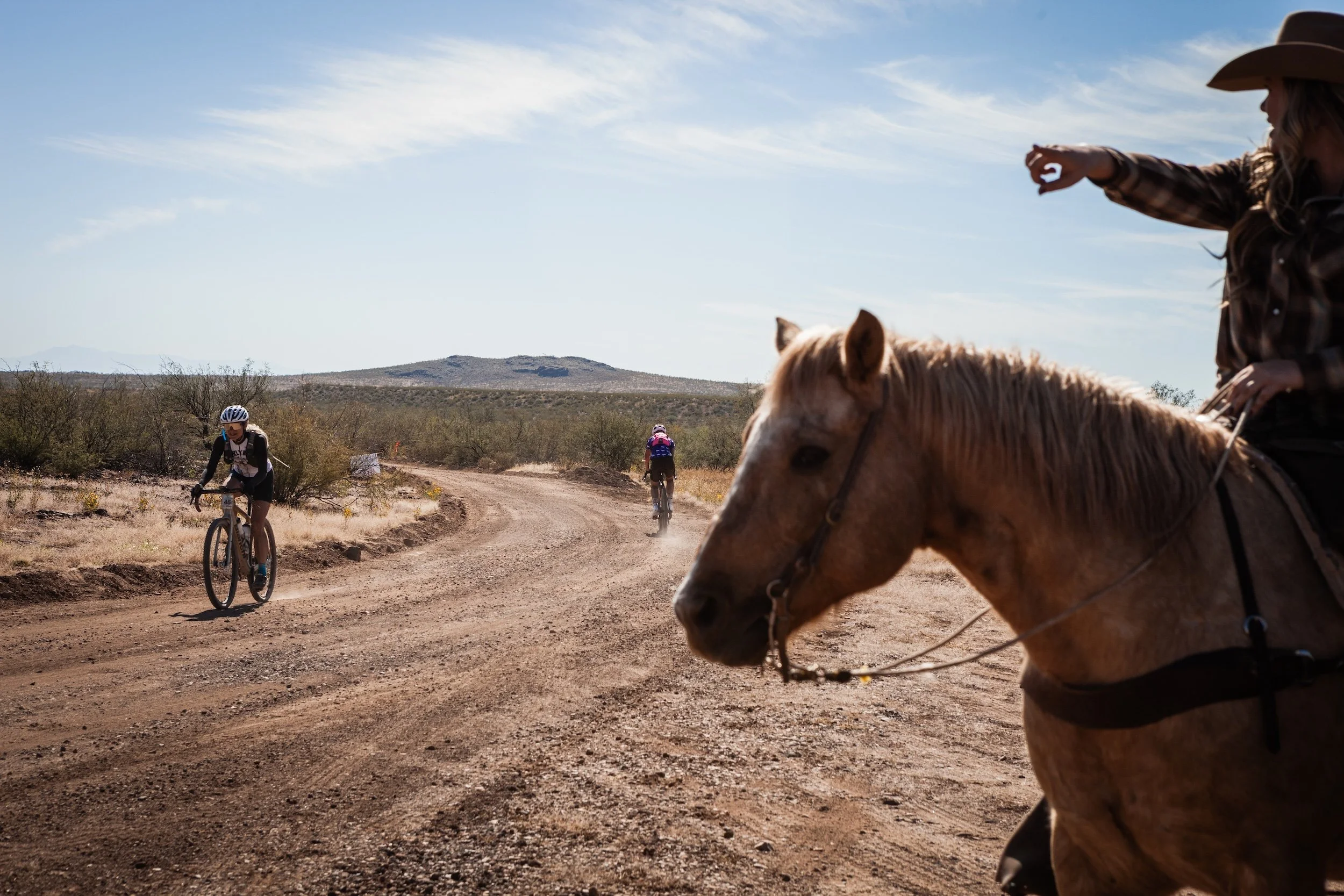
Instead of simply posting that your town has trails, talk about the volunteers building and maintaining them. At events like Spirit World 100 gravel cycling race in Patagonia, Arizona, the story is not just the event itself, but the collaboration, stewardship, and community behind it.
Instead of saying your town has history, tell the stories behind the buildings, roads, ranches, rivers, or communities.
Instead of promoting a gravel race, showcase why riders traveled hundreds of miles to experience your town in the first place.
Social media works best when it creates an emotional connection. That means your content should answer questions like:
Why does this place matter?
Who are the people behind it?
What makes it different?
What does it feel like to be there?
Tourism is emotional before it is transactional. People rarely travel somewhere simply because of information alone. They travel because they can picture themselves there.
THE BEST SOCIAL MEDIA CONTENT PILLARS FOR SMALL TOWN TOURISM MARKETING
One of the easiest ways to simplify social media strategy is by creating content pillars. These are recurring themes your community consistently talks about online. For a small town, those pillars might include:
Outdoor Recreation Content
Trails, rivers, hiking, cycling, fishing, camping, climbing.
Local Business Promotion
Coffee shops, breweries, restaurants, outfitters, makers.
Community Event Marketing
Festivals, races, rodeos, concerts, farmers markets.
Local History and Heritage Tourism
Historic buildings, ranching history, Indigenous history, logging heritage, mining heritage.
Community Stories and Local Voices
Volunteers, artists, entrepreneurs, organizers, locals.
Once these pillars are established, creating content becomes dramatically easier because you are no longer starting from zero every week. You are simply telling different stories within the same framework.
WHY CONSISTENCY MATTERS MORE THAN GOING VIRAL ON SOCIAL MEDIA
This is one of the most significant shifts communities need to make.
While it would be nice, you do not need every post to explode online. In fact, most successful tourism marketing happens consistently over time. In fact, it’s pretty mundane, but awareness compounds.
A visitor may:
see your town mentioned in a Reel
later read an article
later see photos from an event
later hear a friend mention it
then eventually decide to visit
That’s how destination awareness works. One post rarely changes everything. Repeated exposure does.
This is especially important for rural communities because many people do not yet know your town exists. Social media’s first job is awareness. Not immediate conversion.

HOW SMALL TOWNS CAN PROMOTE TOURISM USING EXISTING COMMUNITY ASSETS
Another mistake communities make is assuming they need huge projects before they can market themselves. You probably already have stories worth telling.
A river.
A trail.
A historic downtown.
A rodeo.
A diner.
A scenic road.
A seasonal event.
A volunteer group.
A local coffee shop.
A mountain view.
A quirky annual tradition.
The strongest tourism marketing often comes from amplifying what already exists rather than manufacturing something artificial.
Small towns definitely do not win by pretending to be cities. They win by leaning harder into what makes them uniquely themselves.
BUILDING A LONG-TERM SOCIAL MEDIA STRATEGY FOR RURAL ECONOMIC DEVELOPMENT
Social media strategy is not about posting more (although that does help). It is about building and curating an identity over time.
The communities gaining momentum today are often the ones that started telling their story years ago, before anyone was paying attention.
That’s why consistency matters so much.
Every post becomes part of a larger narrative.
Every article.
Every Reel.
Every event recap.
Every photo.
Together, they slowly shape public perception. Before someone visits your town, signs up for your event, opens a business, or books a hotel room … they first need a reason to notice and care.
That’s what a social media strategy really is. It’s not just content creation. It’s helping people see your community in a different light. And for many rural towns right now, that may be one of the most important forms of economic development available.