This Is Documentary Photography, Not Just Race Photography
DOCUMENTARY CYCLING PHOTOGRAPHY: TELLING THE STORY OF GRAVEL RACING
There’s something about shooting back-to-back gravel races that left me both partly exhausted and creatively lit up. I rolled back into Portland Sunday night after spending the weekend on the Oregon Coast shooting the Oregon Coast Gravel Epic and West Coast Gravel. Two races, two towns, one camera, a burrito-stained hoodie, and a tick embedded in my shoulder.
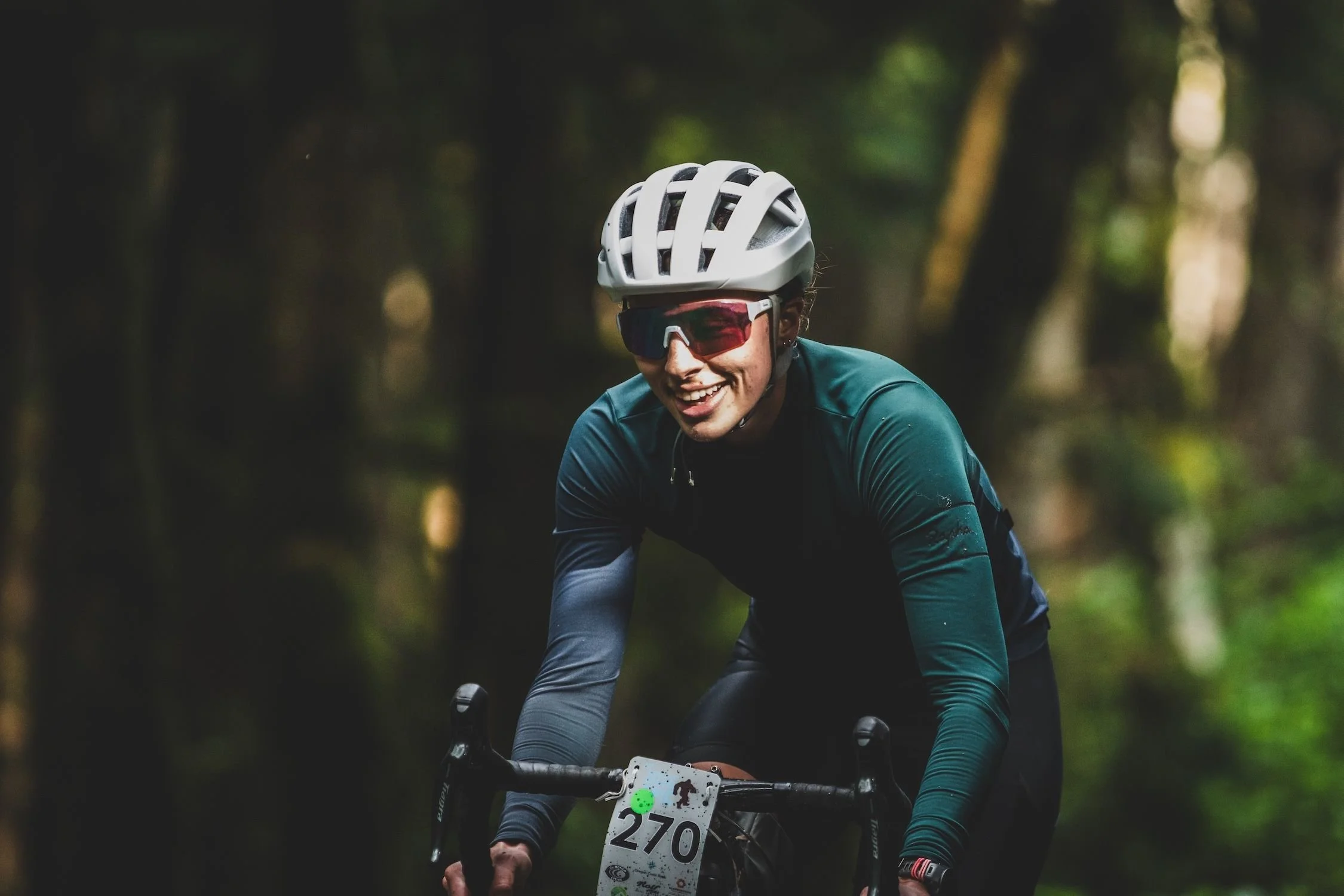
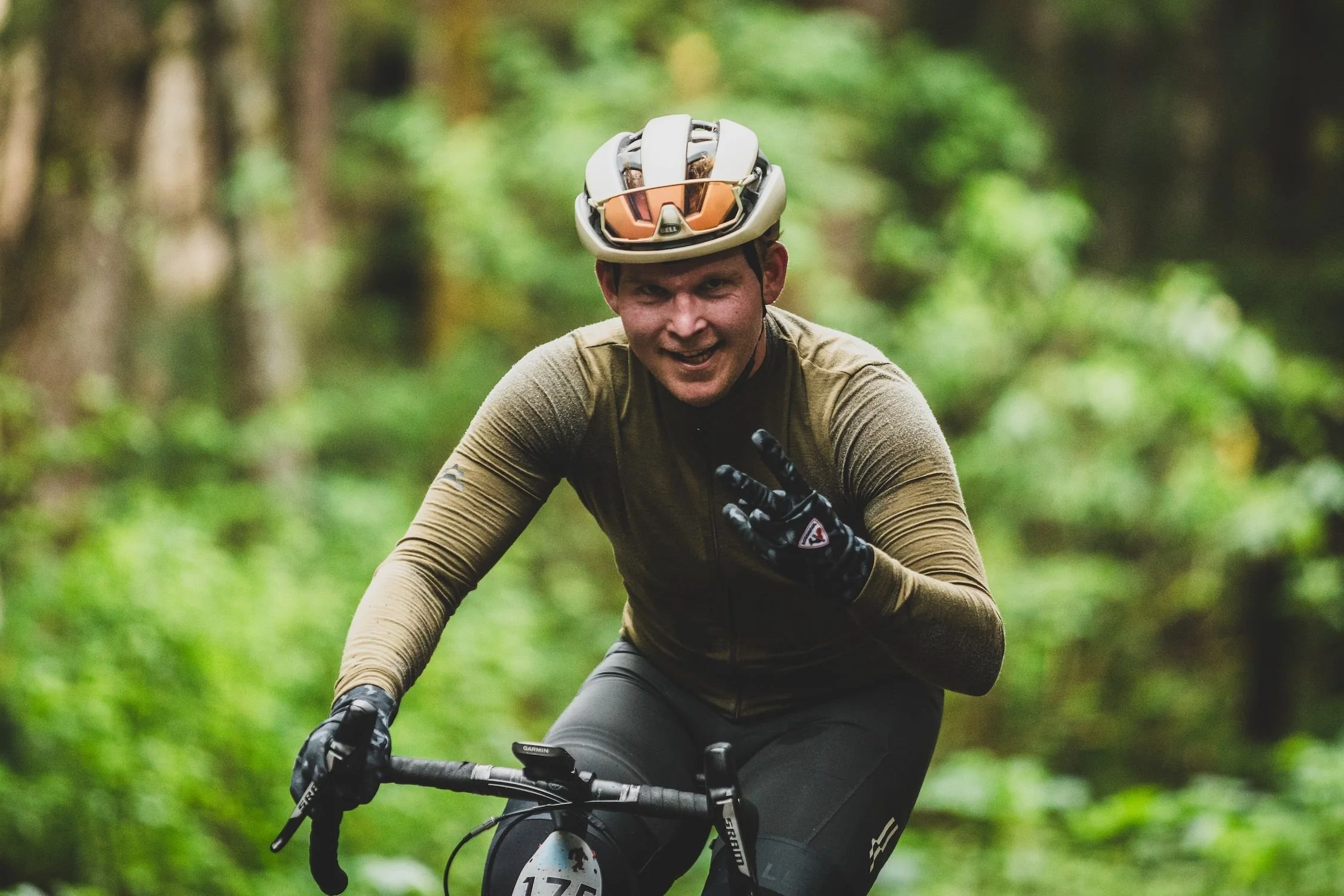
I shoot like I’m telling a story … because I am. That’s the goal: make a rider feel the race again when they see the photo. Make someone who wasn’t there wish they were (a little FOMO always helps).
WHY PHOTOGRAPHY IS MORE THAN JUST CAPTURING AN IMAGE
Every now and then, it’s fun to pause and write about topics like this. I constantly get messages about either my photography specifically or photography in general. It also comes up in the undergrad digital media courses I teach (beyond Intro to Photography).
For me, photography is art. It’s artistic expression more than simply capturing an image. Way back when, I started college as an art major. In my first semester in a painting class, I vividly recall my professor chiding me, “If I wanted a replica, I’d take a photo.” In other words, to use art to tell a story creatively. That has influenced how I take and edit photos.
BEST CAMERA GEAR FOR GRAVEL RACE PHOTOGRAPHY (SIMPLE SETUP THAT WORKS)
One Camera. One Lens
Most of the time when shooting races, I keep my gear simple. Just one camera body and a 70–200mm lens. I don’t like switching glass mid-race. I don’t want to be fiddling with gear when a rider zips by. I say “most of the time” because I enjoy packing old DSLR cameras (Canon 5D Mark II and Canon 30D). Those photos come out a bit more grainy and not crisp. Perfect for pre- and post-race BTS shots.
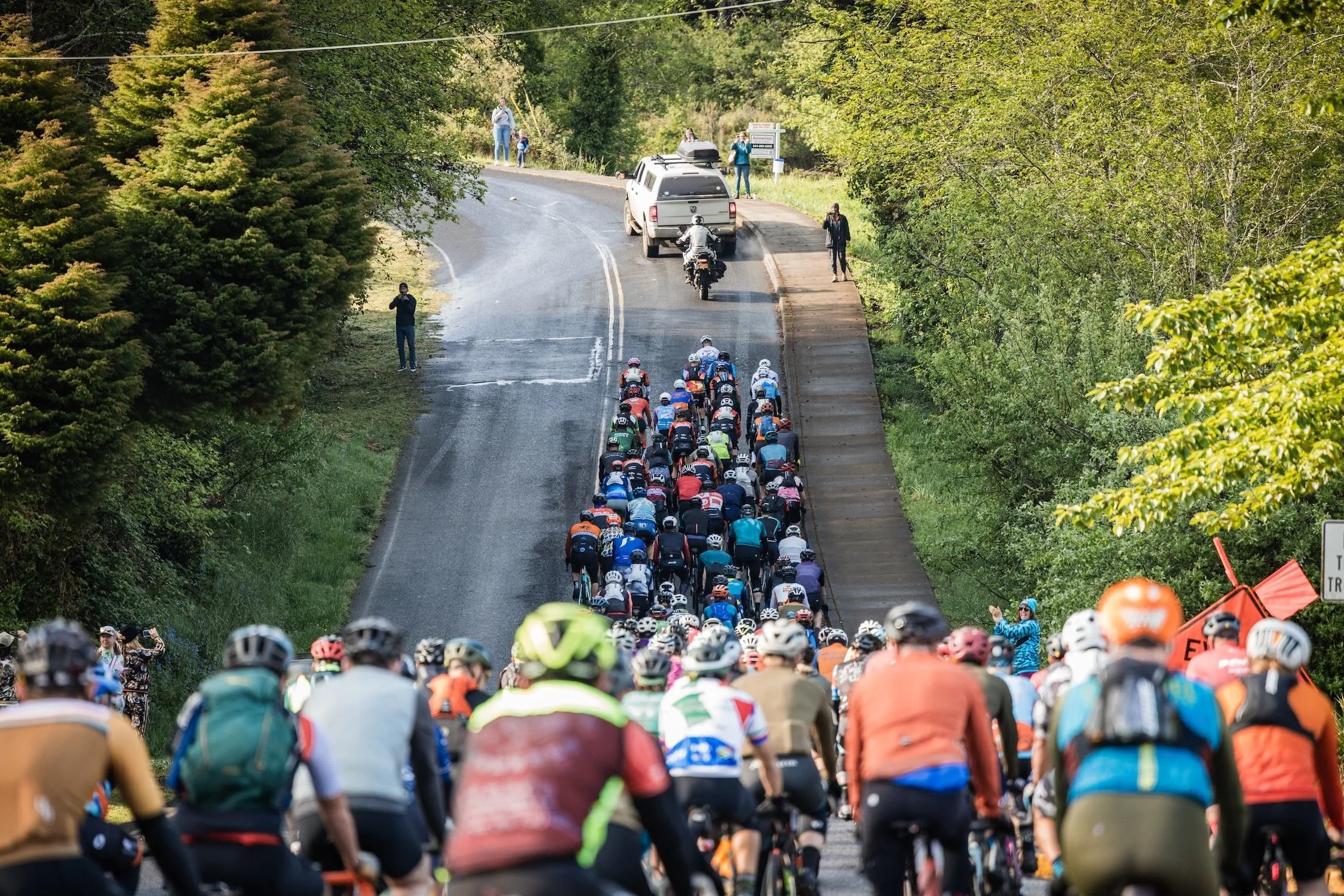
With my regular setup, I can zoom in tight to grab a face full of mud or pull back and frame a rider against the backdrop of the forest. The coast delivered it all … foggy mornings, bursts of sunlight through trees. You can’t plan for that, but you can be ready.
HOW TO SHOOT GRAVEL RACES: ANGLES, LIGHT, AND LOCATION SCOUTING
I usually scout out spots ahead of time. I’m constantly looking for angles, road or trail intersections, and where the light might hit just right. Low angles are my favorite. There’s something about getting down in the dirt and letting the scene tower over the frame.
On Sunday, I parked my SUV on an empty stretch of gravel road. I was about an hour ahead of when the racers would reach me. It gave me time to walk and explore, looking at angles and sightlines. I sat there, chewing and spitting seeds, and watching the clouds alter the lighting, thinking through what I’d do if the sun were on full blast or if it’d tucked behind the clouds.
EDITING GRAVEL RACE PHOTOS FOR A CINEMATIC, DOCUMENTARY STYLE
Editing with Intention
Once I get home, that’s when the real work starts. I easily spend 15–20 hours editing a weekend like this. No batch edits. No copy-paste. I rotate between three Lightroom presets I’ve developed … each one has a purpose. One leans into vibrant color, another is all matte blacks and low exposure, and the third strips it down to black and white.
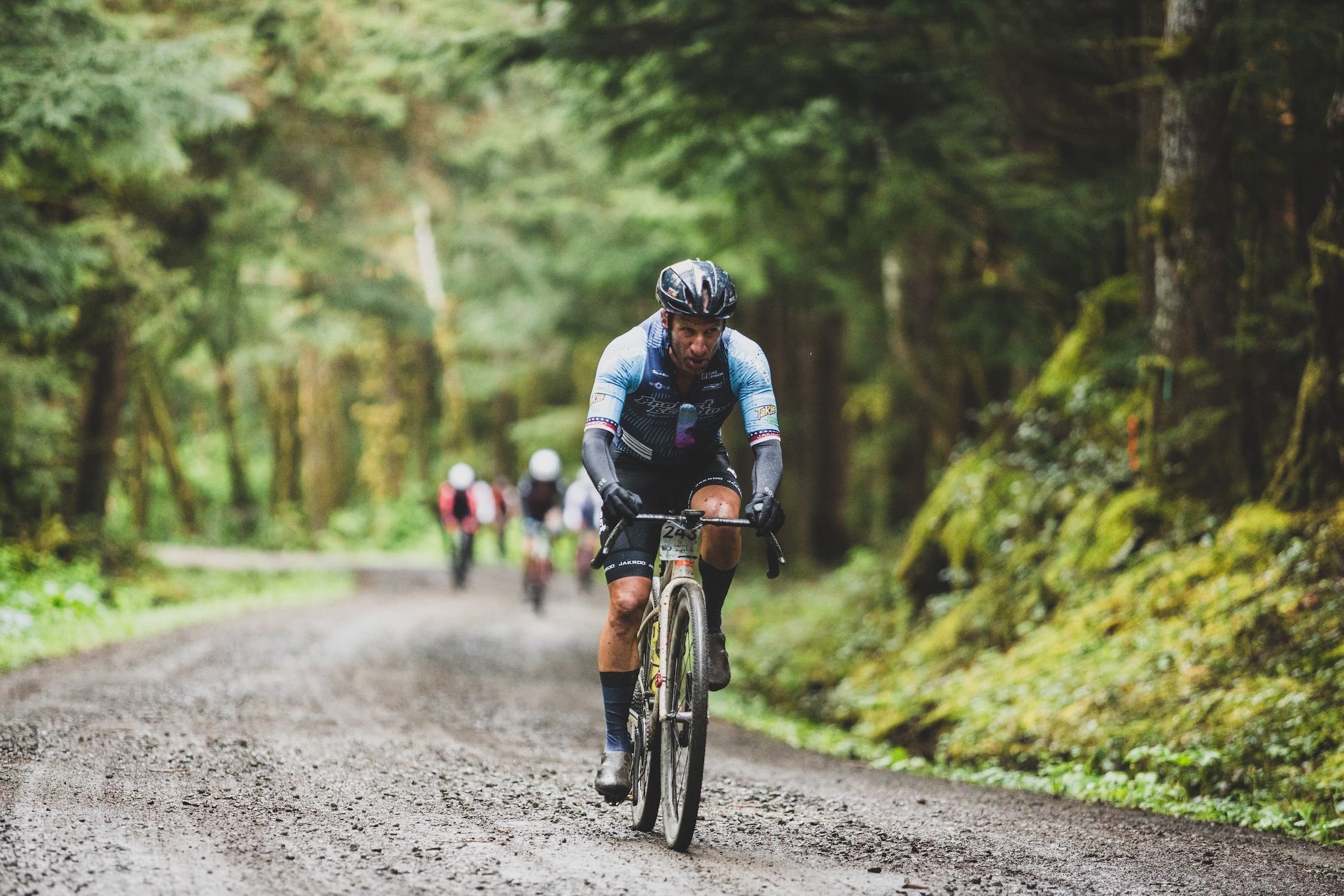
I want the edit to match the emotion of the shot. If it’s a solo rider grinding up a hill in the shadows of the trees, I’m not brightening that up. The style leans darker, more moody, cinematic. Not your standard race-day gallery with sunshine and overexposed faces. That’s just not me.
WHAT MAKES DOCUMENTARY RACE PHOTOGRAPHY DIFFERENT
Telling the Full Story
From the moment I pull into the parking lot, I’m documenting. Riders sipping coffee, pumping tires, lining up for the start, looking at their GPS. I want to tell the story beyond just the course. The nervous energy at the starting line. The chaos of the first climb. The quiet conversations after it’s all done, bikes leaning on trucks, burritos being devoured.
This is documentary photography, not just race photography.