“We don’t really have a brand. We just put on a good event,” a gravel race director friend told me.
He said it casually. Almost proudly.
And in one sense, he was right. His course was solid, and the race was a blast. The volunteers showed up. The aid stations were stocked. Riders finished tired and smiling.
However, if you put on a race, you have a brand.
The only question is whether it’s intentional.
Your Race Is Already Being Described
Before a rider ever clicks “Register,” they’ve likely heard something.
“It’s a tough course.”
“It’s super grassroots.”
“They run a tight ship.”
“It’s kind of chaotic.”
“It feels legit.”
“It’s fun but small.”
That language is your brand.
Not your logo.
Not your color palette.
Not your drone footage.
Branding is reputation at scale.
It’s memory plus expectation.
It’s what riders believe will happen when they show up at your start line ... because of what happened last time.
Or what they’ve seen online.
Or what someone else told them.
Brand Is a Byproduct, Not a Tactic
In a presentation I gave recently, I said something that usually surprises people:
“You don’t ‘do branding.’ You do work. And branding shows up as the residue of that work.”
Like a good university instructor, my superpower is quoting and citing others (just as in the quote above from Alex
Hormozi).
If registration is smooth every year, that becomes part of your brand.
If communication is confusing every year, that becomes part of your brand.
If your post-race coverage makes riders feel seen, that becomes part of your brand.
Results create reputation.
Reputation compounds.
And over time, that reputation scales beyond your local community.
That’s when a regional race becomes a destination race.
Not because of hype.
Because of expectation.
The Invisible Layer Most Races Ignore
Here’s where this gets interesting.
Race directors like to focus on logistics. As they should.
Permits.
Insurance.
Volunteers.
Course markings.
Weather contingencies.
But very few focus on how their race is perceived when they’re not in the room.
Or more accurately ... when they’re not in the feed.
Because for most riders, your digital presence is the room.
Your Instagram grid.
Your website.
Your registration page.
Your email cadence.
That’s where expectations are formed.
If your visuals feel polished and consistent, riders assume the event will be polished and consistent.
If your communication is clear and calm, riders assume race day will be clear and calm.
If everything feels improvised, they assume parts of the event might be too.
Fair or not, perception shapes trust.
Trust shapes registrations.
Memory + Expectation = Momentum
Let’s say a rider has a great experience at your race this year.
They felt supported.
They loved the course.
They saw beautiful photos of themselves afterward.
They shared those images.
They told friends.
Now a memory exists.
Next year, when registration opens, they don’t evaluate your race from scratch.
They register because they expect that same outcome.
That expectation is your brand at work.
Multiply that by 50 riders.
Then 200.
Then 500.
That’s reputation scaling.
And once that expectation spreads beyond your immediate circle, something shifts.
You’re no longer convincing people to try your race.
You’re hosting something people already trust.
The Hard Question
Here’s the question that race directors may squirm when asking themselves:
If I stopped posting tomorrow, what would people assume about my race?
Would they assume it’s still happening?
Would they assume it’s well run?
Would they assume it’s growing?
Or would silence create doubt?
Brand strength is measured by what people believe in the absence of new information.
That belief is built slowly.
Through consistent outcomes.
Through consistent storytelling.
Through consistent visuals that reinforce what the event actually feels like.
Not through a last-minute content push in the month before race day.
This Is Where Media Becomes Strategy
When I partner with races, whether it’s helping shape their social media infrastructure or documenting race day, I’m not thinking merely about “content.”
I’m thinking about memory.
What will riders remember?
What will they share?
What expectation will this create for next year?
Last year, I shot a race for which I was handsomely compensated. Instead of the typical routine of posting and then selling my photos to racers, I made it free for everyone. Hundreds ... thousands of downloads. People posted and shared all over social media.
When it comes to registering this year, what might stand out?
A single race day doesn’t build a brand.
A documented race day does.
A clearly communicated race season does.
A visual identity that carries from announcement to start line to recap does.
That’s when storytelling turns into infrastructure.
And infrastructure is what compounds.
You Already Have a Brand
The good news?
You don’t need to invent one.
You simply need to recognize the one that’s already forming around your race.
Then ask:
Is this the reputation I want to scale?
Because whether you shape it or not, it’s spreading.
And over time, what riders expect from your race becomes more powerful than anything you say about it.
That’s branding.
Not designed.
Earned.
And when it’s aligned with the experience you actually deliver, it becomes your greatest growth engine.
about the author
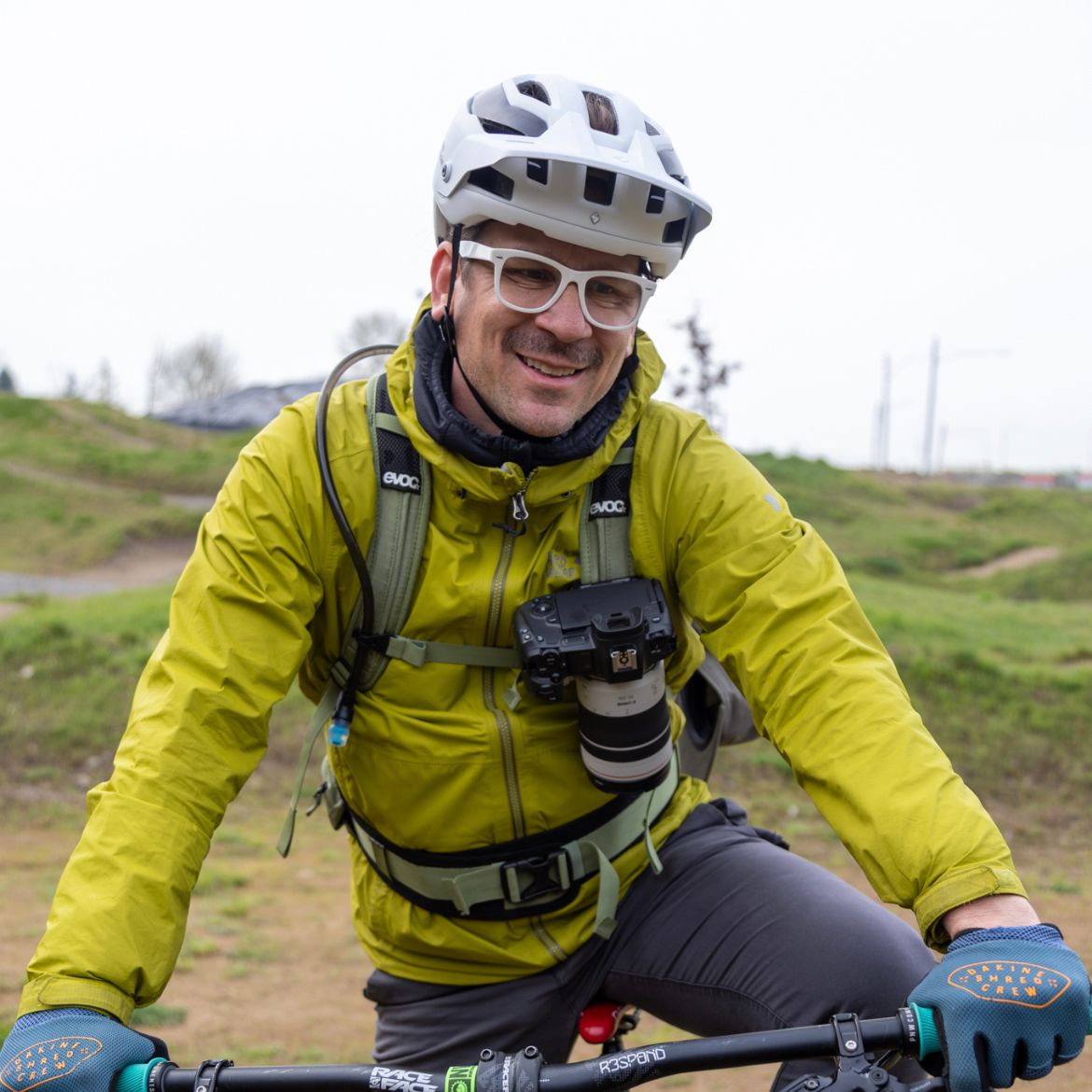
Sean Benesh
Sean Benesh is a storyteller and strategist based in Portland, Oregon. He works with rural communities, trail organizations, and race organizers to help them tell their stories, grow their online reach, and build momentum through photography, writing, and social media. He is the founder and editor-in-chief of Trail Builder Magazine and serves as the communications director for the NW Trail Alliance.